
By: Daniel Coughlin …….

The affluent mountain retreat that time forgot
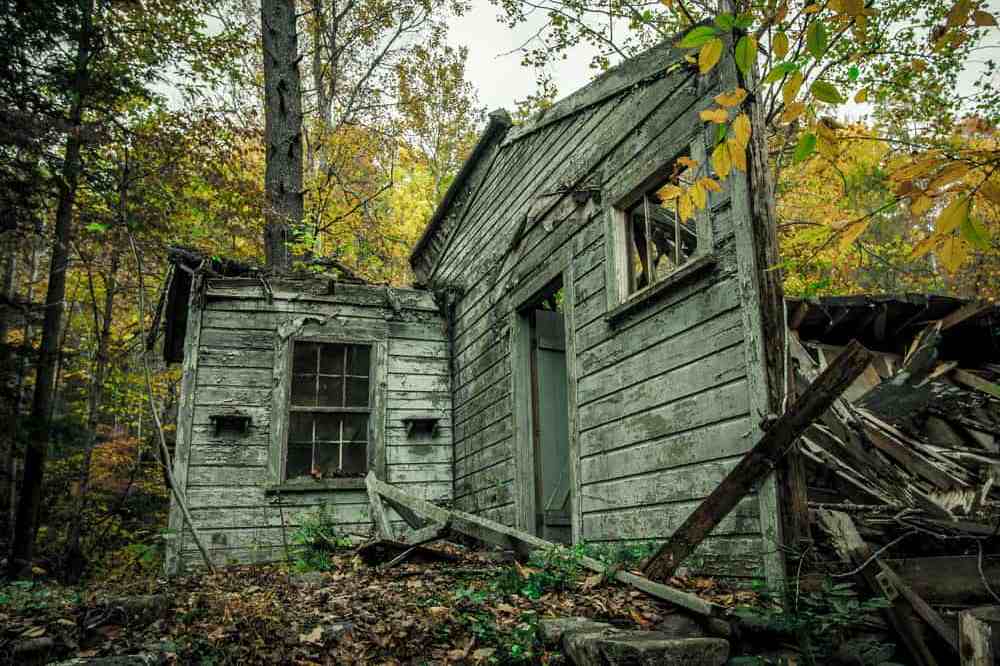
Hidden within the forests of the Great Smoky Mountains lies a forgotten holiday haven once frequented by East Tennessee’s wealthiest families. Now reduced to an eerie ghost town, Elkmont bustled with charming log cabins and plush amenities in the late 19th and 20th centuries – the community even boasted a Millionaires’ Row. Captured by Leland Kent for Abandoned Southeast, let’s take a trip back in time and discover why this luxury destination was so hastily abandoned.

Mountain escape
Elkmont was founded in 1908 by the Little River Lumber Company as a logging community, though urban dwellers had begun visiting the area during the late 19th century to escape the stifling heat of Knoxville and other nearby cities in Tennessee. They would travel up to the rural idyll in caravans to while away the dog days of summer in the crisp mountain air.

Tourist attraction
However, tourism in Elkmont didn’t really take off until 1910, when the Little River Lumber Company started selling plots of land to members of Knoxville’s elite. The previous year, the firm had established a daily railroad service connecting the city with the picturesque mountain town. Day-trippers and vacationers would ride in open observation cars to make the most of the breathtaking views.

Affluent visitors
Knoxville’s wealthiest residents flocked to the town, buying up land and erecting luxury summer cabins. In 1910 they created the private Appalachian Club and built a large clubhouse. The 3,000-square-foot structure was used as a gathering place for members and their guests, and hosted many a glittering event.
Exclusive hotel
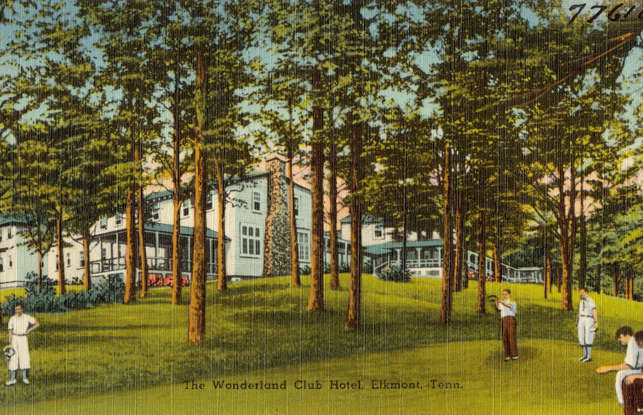
The Wonderland Hotel, a swish 50-room resort lodge, was constructed in 1912 and bought in 1919 by a group of Knoxville businessmen, who formed the exclusive Wonderland Club. Grander than the Appalachian Clubhouse, the two-story hotel was located just above the Little River Railroad station.

Rustic interior
As you can see from this amazing historic photo of the Wonderland Hotel lobby captured in 1938, the lodge, like the other buildings in Elkmont, was decked out in rustic décor and featured large stone and brick fireplaces, hardwood flooring and clapboard walls. The rooms were filled with country-style furniture, including homely rocking chairs and wooden sofas.

Scenic spot
Stone steps led from the station to the hotel and the staircase became a popular spot for visitors to pose for photos. Rocks from the Little River were cemented at the top of the steps, spelling out ‘Wonderland’. The steps can still be seen today but thanks to dense overgrowth and weeds, they’re pretty hard to discern.

Sad demise
Sadly, this is all that remains of the upscale Wonderland Hotel. The building collapsed in 2005 and what was left burned to the ground in 2017 in a suspected arson attack. Several cabins were also set alight. The Appalachian Clubhouse actually succumbed to fire in 1934 but was rebuilt that same year and has since been restored for posterity.
Elkmont’s heyday
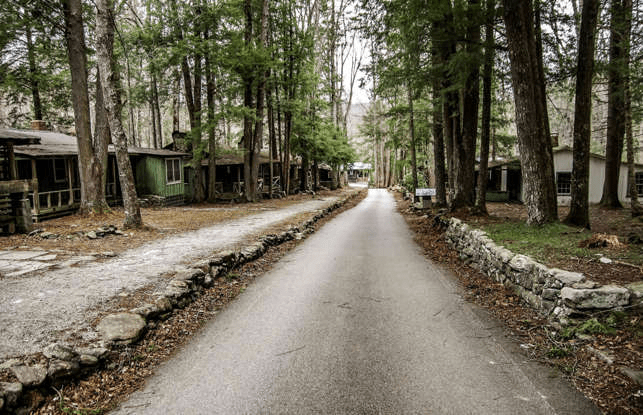
Captured here by Leland Kent of Abandoned Southeast, during the 1920s and 1930s, the resort town’s heyday, Elkmont was the premier summer destination for the upper echelons of Knoxville society. On the now abandoned streets, dozens of cabins were built lining the road to the Appalachian Clubhouse. This section of Elkmont became known as Daisy Town. Other parts of the resort were dubbed Millionaires’ Row and Society Hill on account of their lavish log residences.
Oldest cabin
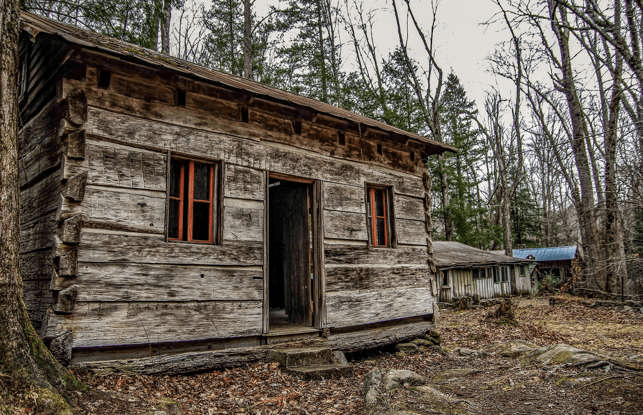
The Levi Trentham cabin is the oldest structure in the town and one of the most venerable surviving homes in the Great Smoky Mountains. The log building was constructed in 1830 by its namesake, mountaineer Levi Trentham, the so-called ‘Prophet of the Smokies’, who served as a guide to many of the Elkmont holidaymakers. It was transplanted to Daisy Town following his death in 1932 to serve as a guest cottage.
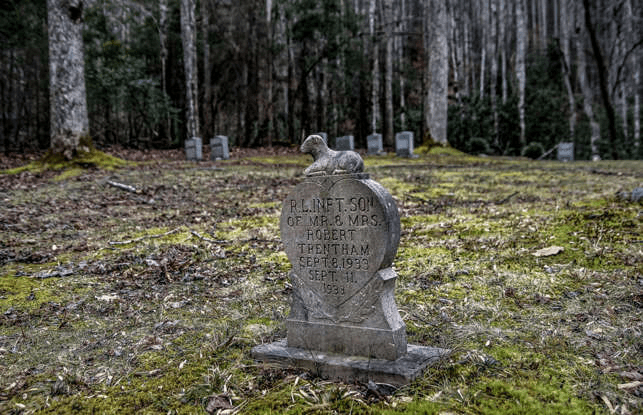
Spooky cemetery
Elkmont also had less affluent areas, home to modest residences for those involved in the logging industry, as well as humble vacation cottages that were owned or rented by Knoxville’s less well-off residents. The town also boasted a church, a general store, a post office, a theater and even a graveyard.
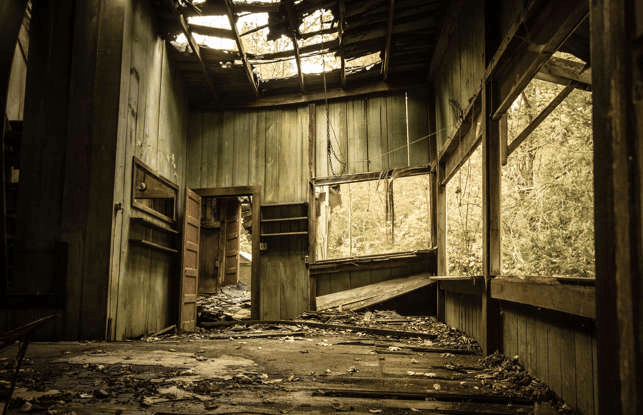
A turn for the worse
The lifetime leases were converted to 20-year leases in 1952 and renewed again in 1972. But luck was running out for the leaseholders and in 1992 the National Park Service refused to renew the contracts. The decision was influenced by environmental organization the Sierra Club, which argued that private land ownership shouldn’t be permitted within national parks. The landowners were effectively kicked out and the cabins and other structures were abandoned.

A crumbling ghost town
Relics of a long-past era, many of the other historically important vacation cottages are still waiting to be brought back to life. Visitors can glimpse them from the outside but the interiors of the properties, which are seriously unsafe, are strictly out of bounds. While there’s hope on the horizon, the future of the rest of Elkmont still hangs in the balance. Only time will tell if this abandoned ghost town can be brought back to life again.

 Dark Fringe Radio