

By: William Martinez ………

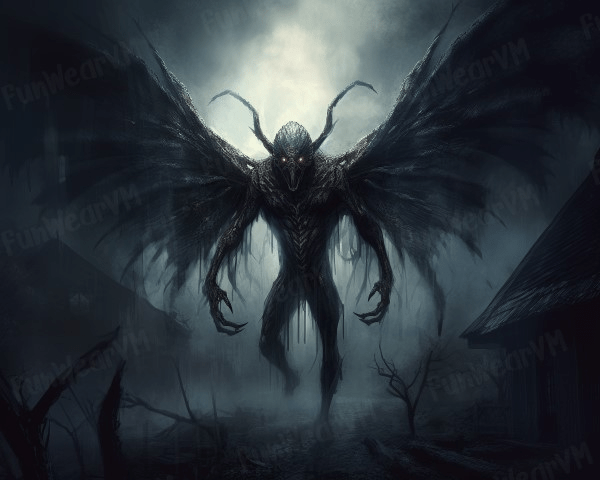
The year is 1966. A small, rural community in West Virginia is gripped by an unsettling wave of strange sightings and inexplicable events. It begins with whispers of a giant, winged humanoid with glowing red eyes, seen soaring through the night sky. The creature, soon dubbed “Mothman,” becomes a local obsession, its appearances seemingly linked to a string of terrifying phenomena, culminating in one of the worst civil engineering disasters in American history.
This is the chilling premise of The Mothman Prophecies, a book by journalist John Keel that was later adapted into a popular film. But beyond the cinematic spookiness, the story of Mothman raises a compelling question: Was this a genuine harbinger of doom, a supernatural being warning of tragedy, or is it simply a piece of fascinating, modern American folklore?
The Mothman Sightings: A Timeline of Terror
The Mothman saga is inextricably tied to the town of Point Pleasant, West Virginia. The first widely reported sighting occurred on November 15, 1966, when two couples driving in a car reported seeing a large, gray creature with glowing red eyes and a massive wingspan near an abandoned TNT plant.
Over the next thirteen months, dozens more sightings were reported. Residents spoke of a creature that was remarkably fast, able to keep pace with a speeding car. Its appearance was often accompanied by strange humming sounds, electrical interference, and a feeling of dread. These reports weren’t just isolated incidents; they were a community-wide phenomenon that created a palpable sense of fear.
The Silver Bridge Collapse: The Tragic Climax
The Mothman sightings reached a fever pitch in the weeks leading up to December 15, 1967. On that fateful day, the Silver Bridge, which connected Point Pleasant to Gallipolis, Ohio, collapsed during rush hour. Forty-six people lost their lives in the catastrophe.
For many, the timing was no coincidence. The intense sightings of Mothman, they believed, were a chilling prelude to the disaster. The Mothman was not a malevolent entity causing the bridge collapse, but a sorrowful harbinger, a supernatural omen attempting to warn the town of the impending tragedy. This interpretation is a cornerstone of John Keel’s work, which weaves together the sightings, eerie phenomena, and the bridge collapse into a single, cohesive narrative.
Debunking the Myth: The Case for Folklore
While the Mothman story is compelling, skeptics and folklorists offer alternative explanations that ground the legend in more earthly terms.
- Mistaken Identity: Many sightings of Mothman can be explained as misidentified creatures. The most common theory points to the sandhill crane, a large bird native to the region. With a wingspan of up to 6 feet and a red patch around its eyes, a sandhill crane seen in the dark could easily be mistaken for a much more sinister creature. The barn owl and other large birds have also been proposed as culprits.
- Mass Hysteria and Urban Legend: The Mothman legend is a prime example of a modern urban legend, a story that spreads rapidly through a community and is often embellished with each retelling. The initial reports of strange sightings, combined with the subsequent bridge collapse, provided the perfect fertile ground for a cautionary tale. The community’s shared experience of trauma and fear likely fueled the proliferation of the Mothman story, turning a few isolated incidents into a full-fledged legend.
- John Keel’s Narrative: John Keel’s book, while a fascinating piece of journalism and storytelling, is often criticized for its sensationalism and its reliance on uncorroborated accounts. Keel was a strong believer in the paranormal and his work often connected the Mothman to other phenomena, including UFOs and “Men in Black,” which for many skeptics, undermines the credibility of his claims.
The Enduring Legacy of Mothman
Regardless of whether you believe Mothman was a true harbinger of doom or a piece of modern cryptid folklore, its story has become a permanent fixture in American culture.
- A Symbol of Hope? For some, Mothman is not a symbol of dread, but of warning and protection. Its tragic inability to prevent the bridge collapse only deepens its pathos, transforming it from a monster into a tragic hero.
- A Tourist Destination: The Mothman legend has revitalized Point Pleasant, turning the town into an unlikely tourist destination. Visitors can explore the Mothman Museum, see the iconic Mothman statue, and attend the annual Mothman Festival, proving that even the most terrifying legends can bring people together and create a unique sense of community.
The Mothman Prophecies remains a powerful and unsettling tale. It’s a story that blurs the lines between reality and the supernatural, prompting us to question what we truly believe. Was Mothman a harbinger of doom, a tragic omen whose warnings went unheeded? Or was it simply a product of human psychology, mass hysteria, and the deep-seated need to find meaning in tragedy?
Ultimately, the Mothman legend is a testament to our enduring fascination with the unknown. It is a story that captures the unique blend of fear and wonder that defines American folklore, ensuring that the dark, winged figure with glowing red eyes will continue to soar in our collective imagination for generations to come.

 Dark Fringe Radio