

By: William Martinez ……..
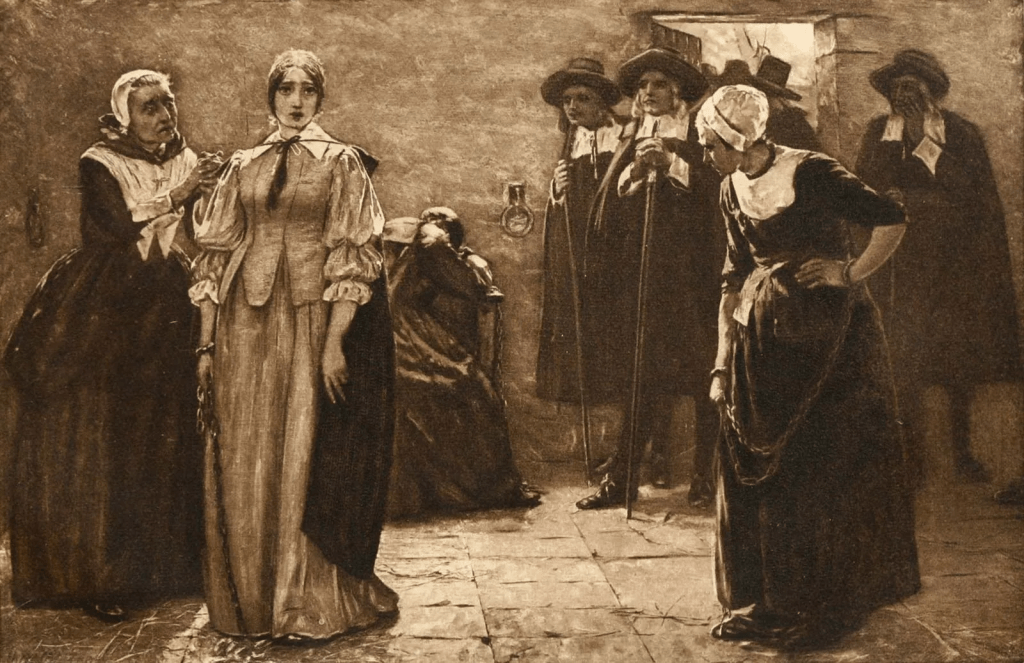
The Salem Witch Trials were a series of hearings and prosecutions of people accused of witchcraft in colonial Massachusetts between 1692 and 1693. This dark chapter in American history, born from a perfect storm of fear, religious extremism, and social tensions, resulted in the deaths of 20 people and the imprisonment of many more. The events in Salem have become a powerful cautionary tale about the dangers of mass hysteria, religious fanaticism, and the erosion of due process.
The Roots of Hysteria: A Society on Edge
To understand the trials, one must first grasp the environment of 17th-century Salem. The community was a Puritan settlement, and its inhabitants lived with a deep-seated belief in the devil and his ability to grant power to witches. They believed that witches could inflict harm upon the pious, making the spiritual world a constant and terrifying reality.
Several factors contributed to the heightened anxiety:
- Religious Zealotry: The Puritans saw themselves as God’s chosen people, engaged in a perpetual battle with Satan. Any misfortune, from crop failure to disease, was often attributed to supernatural forces.
- Political and Social Instability: The colony lacked a formal government at the time, leading to a breakdown in established legal procedures. Additionally, long-standing disputes between families and within the community created a volatile social climate.
- Economic Tensions: Salem Village was experiencing a period of economic hardship. Disputes over land and resources fueled resentment and suspicion among neighbors.
The Spark that Ignited the Fire
The trials began in January 1692, when a group of young women, including Abigail Williams and Betty Parris, began exhibiting strange behaviors—contorting their bodies, screaming uncontrollably, and suffering from mysterious fits. Their symptoms baffled the local doctor, who, unable to find a natural cause, concluded that they were bewitched.
Under pressure from their families and community leaders, the girls pointed fingers. Their first accusations were against three marginalized women:
- Tituba: A West Indian slave in the Parris household, she was the first to confess and implicate others, likely under duress.
- Sarah Good: A poor, homeless woman with a reputation for muttering and begging.
- Sarah Osborne: An elderly woman with a history of disputes and a reclusive nature.
Tituba’s confession was a pivotal moment. By confirming the existence of a demonic plot and naming other witches, she legitimized the girls’ claims and gave the accusations a dangerous momentum.

The Witch Hunt: A Cascade of Accusations
The initial accusations quickly spiraled into a full-blown witch hunt. The accusers, now known as the “afflicted girls,” gained immense power. Their testimony, often based on “spectral evidence”—claims that they saw the accused’s spirit or ghost inflicting harm—was accepted as proof in court. This type of evidence was impossible to refute, as only the accuser could “see” the spectral form.
As more people were accused, the trials moved from Salem Village to Salem Town. The accused were often pressured to confess and name other witches in exchange for leniency. Those who maintained their innocence were almost certain to be found guilty and sentenced to death.
Notable victims of the trials include:
- Bridget Bishop: A tavern owner known for her independent nature and flamboyant dress, she was the first person hanged on June 10, 1692.
- Reverend George Burroughs: A former minister of Salem Village, his public execution and composed prayer on the gallows led some to question the validity of the trials.
- Giles Corey: An 81-year-old farmer who refused to enter a plea, he was tortured to death by being pressed with heavy stones, an act known as peine forte et dure.
The Slow End and Lasting Legacy
By late 1692, public opinion began to turn. Skepticism grew as respected members of the community were accused, and some officials, like Governor William Phips, began to doubt the use of spectral evidence. In October 1692, Governor Phips ordered a halt to the trials and established a new court that did not allow spectral evidence. The remaining cases were dismissed, and those in jail were eventually released.
The Salem Witch Trials serve as a profound lesson in history. They highlight the fragility of justice in the face of widespread panic and the dangers of allowing religious and social prejudices to override reason and law. The events in Salem remind us of the importance of critical thinking, due process, and the protection of civil liberties. They stand as a somber monument to the tragic consequences of unchecked fear and mass hysteria.

 Dark Fringe Radio