
By: William Martinez ……..
Is it possible to move through time? While the concept of time travel is a staple of science fiction, modern physics offers both compelling theories and daunting challenges regarding its feasibility. The answer isn’t a simple yes or no; rather, it depends on whether we’re talking about traveling into the future or the past.
Time Dilation: Traveling to the Future
The most scientifically accepted form of time travel is time dilation, a phenomenon predicted by Albert Einstein’s theories of relativity. It tells us that time is not a universal constant, but is instead relative to an observer’s motion and gravity.
- Velocity Time Dilation: According to Einstein’s theory of special relativity, the faster an object moves, the slower time passes for it relative to a stationary observer. This isn’t just a theory; it’s a proven fact. For instance, astronauts aboard the International Space Station (ISS), which orbits Earth at high speeds, experience time slightly slower than people on the ground. When they return, they’ve aged a tiny fraction of a second less than their counterparts on Earth. While this effect is negligible at human speeds, if a spacecraft could approach the speed of light—186,282 miles per second—the time dilation would be extreme. An astronaut traveling for a few years at near-light speed could return to find that decades or even centuries have passed on Earth. This is a one-way trip, however; there’s no going back to your original time.
- Gravitational Time Dilation: Einstein’s theory of general relativity adds another layer, stating that gravity also warps spacetime. The stronger the gravitational field, the slower time passes. This is why clocks on GPS satellites, which are in weaker gravity than on Earth’s surface, run faster. To ensure the accuracy of our navigation systems, scientists must constantly adjust for this effect. A person could, in theory, travel to a location with an immense gravitational pull, like near a black hole, and experience time more slowly. Upon their return, they would find that much more time had passed for everyone else.
The Quest for Backward Time Travel
While traveling forward in time is a well-established scientific reality (at least in a limited sense), journeying into the past is far more speculative and riddled with paradoxes. The key to backward time travel lies in manipulating the very fabric of spacetime to create a shortcut.
- Wormholes (Einstein-Rosen Bridges): Proposed by Einstein and Nathan Rosen, a wormhole is a theoretical “tunnel” through spacetime that could connect two distant points, potentially across both space and time. In theory, if one end of a wormhole were accelerated to near the speed of light and then brought back, the time dilation effect would mean that the two ends of the wormhole would no longer be synchronized. Stepping into the end that moved would allow a person to emerge from the stationary end at a point in the past.
- Tipler Cylinders and Cosmic Strings: These are theoretical objects in general relativity that, if they exist and are configured correctly, could create “closed timelike curves” (CTCs). A CTC is a path through spacetime that loops back on itself, allowing an object to return to an earlier point in its own history. The Tipler Cylinder, a proposed infinite, rotating cylinder, and cosmic strings, hypothetical one-dimensional “cracks” in the universe, could potentially create these curves.
The main obstacle for these theories is that they require immense amounts of exotic matter or energy to create and sustain, which may not exist.
Is it possible to move through time? While the concept of time travel is a staple of science fiction, modern physics offers both compelling theories and daunting challenges regarding its feasibility. The answer isn’t a simple yes or no; rather, it depends on whether we’re talking about traveling into the future or the past.
Time Dilation: Traveling to the Future
The most scientifically accepted form of time travel is time dilation, a phenomenon predicted by Albert Einstein’s theories of relativity. It tells us that time is not a universal constant, but is instead relative to an observer’s motion and gravity.
- Velocity Time Dilation: According to Einstein’s theory of special relativity, the faster an object moves, the slower time passes for it relative to a stationary observer. This isn’t just a theory; it’s a proven fact. For instance, astronauts aboard the International Space Station (ISS), which orbits Earth at high speeds, experience time slightly slower than people on the ground. When they return, they’ve aged a tiny fraction of a second less than their counterparts on Earth. While this effect is negligible at human speeds, if a spacecraft could approach the speed of light—186,282 miles per second—the time dilation would be extreme. An astronaut traveling for a few years at near-light speed could return to find that decades or even centuries have passed on Earth. This is a one-way trip, however; there’s no going back to your original time.
- Gravitational Time Dilation: Einstein’s theory of general relativity adds another layer, stating that gravity also warps spacetime. The stronger the gravitational field, the slower time passes. This is why clocks on GPS satellites, which are in weaker gravity than on Earth’s surface, run faster. To ensure the accuracy of our navigation systems, scientists must constantly adjust for this effect. A person could, in theory, travel to a location with an immense gravitational pull, like near a black hole, and experience time more slowly. Upon their return, they would find that much more time had passed for everyone else.
The Quest for Backward Time Travel
While traveling forward in time is a well-established scientific reality (at least in a limited sense), journeying into the past is far more speculative and riddled with paradoxes. The key to backward time travel lies in manipulating the very fabric of spacetime to create a shortcut.
- Wormholes (Einstein-Rosen Bridges): Proposed by Einstein and Nathan Rosen, a wormhole is a theoretical “tunnel” through spacetime that could connect two distant points, potentially across both space and time. In theory, if one end of a wormhole were accelerated to near the speed of light and then brought back, the time dilation effect would mean that the two ends of the wormhole would no longer be synchronized. Stepping into the end that moved would allow a person to emerge from the stationary end at a point in the past.
- Tipler Cylinders and Cosmic Strings: These are theoretical objects in general relativity that, if they exist and are configured correctly, could create “closed timelike curves” (CTCs). A CTC is a path through spacetime that loops back on itself, allowing an object to return to an earlier point in its own history. The Tipler Cylinder, a proposed infinite, rotating cylinder, and cosmic strings, hypothetical one-dimensional “cracks” in the universe, could potentially create these curves.
The main obstacle for these theories is that they require immense amounts of exotic matter or energy to create and sustain, which may not exist.
The Paradoxes and Their Solutions
The most significant hurdle for backward time travel is the grandfather paradox. If you go back in time and prevent your grandfather from meeting your grandmother, you would never be born. But if you were never born, how could you have gone back in time in the first place? This logical contradiction suggests that backward time travel is impossible.
Physicists and philosophers have proposed a few theories to resolve these paradoxes:
- The Novikov Self-Consistency Principle: This principle suggests that you can’t change the past because any action you take while traveling back in time must already be part of the historical timeline. In this view, if you tried to kill your grandfather, some unforeseen event would always prevent you from succeeding, ensuring a consistent history.
- The Many-Worlds Interpretation (Multiverse Theory): This theory, borrowed from quantum mechanics, posits that every time a decision is made, the universe splits into multiple new timelines. If you went back in time and killed your grandfather, you wouldn’t be erasing your own existence. Instead, you’d be creating a new, alternate timeline where you were never born, while the original timeline—the one you came from—remains unchanged.
The So Called Cases of Possible Time Travel
John Titor
John Titor is perhaps the most well-known alleged time traveler. In 2000 and 2001, an individual using the pseudonym John Titor posted on several online forums, claiming to be an American soldier from the year 2036. He stated that he was sent back in time to retrieve an IBM 5100 computer from 1975, which was needed to debug legacy computer systems in his future. Titor’s posts included detailed descriptions of his time machine, which he said was based on technology from the European Organization for Nuclear Research (CERN), and even diagrams. He also made a series of predictions about the future, including a U.S. civil war beginning in 2004 and a subsequent nuclear war in 2015. None of his major prophecies came to pass, leading most to believe the story was a hoax. The hoax was later linked to a Florida entertainment lawyer and his brother.

Andrew D. Basiago
Andrew D. Basiago is an American lawyer who claims to have been involved in a secret U.S. government program called Project Pegasus from 1968 to 1972. As a child, he alleges he was a “chrononaut,” a term he uses for child time travelers. Basiago claims he was sent on various missions, including traveling back to 1863 to witness the Gettysburg Address and to Ford’s Theatre at the time of Abraham Lincoln’s assassination. He has publicly stated that he was photographed at Gettysburg and that a picture of a boy in the crowd is, in fact, him. Basiago also claims to have been sent to Mars and alleges that a young Barack Obama was part of the same project. His claims have been widely discredited.
Al Bielek
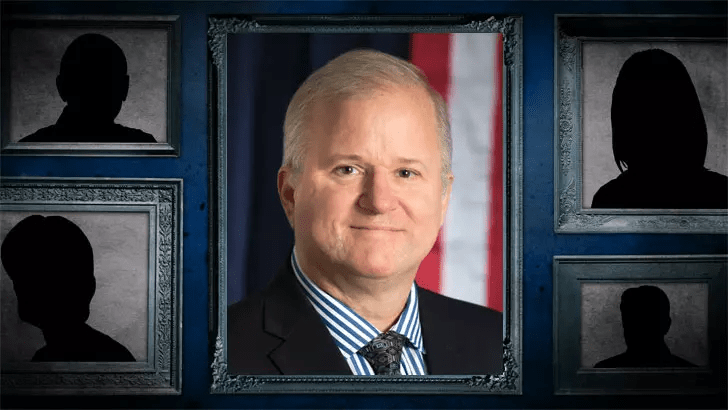
Al Bielek’s story is tied to the infamous Philadelphia Experiment, an alleged secret military experiment conducted in 1943 where a U.S. Navy ship, the USS Eldridge, was said to have been made invisible and teleported. Bielek claimed he was on the ship during the experiment and was transported forward in time to 1984. He said he then worked on the Montauk Project, another alleged secret government program focused on time travel and mind control. According to Bielek, he was eventually “age-regressed” and sent back in time, and his memories were repressed until they returned years later. His claims have been widely debunked and are considered to be part of the larger conspiracy theories surrounding the Philadelphia Experiment.

While time travel into the future is a proven scientific reality based on Einstein’s theories, it’s not the exciting, instant leap we see in movies. It’s a gradual process tied to speed and gravity.
As for traveling to the past, the jury is still out. While the laws of physics, particularly general relativity, don’t explicitly forbid it, the practical requirements are monumental, and the logical paradoxes are profound. It’s a concept that pushes the boundaries of our understanding of reality and causality. For now, the best evidence we have that backward time travel isn’t possible is the simple fact that we haven’t been visited by tourists from the future.

 Dark Fringe Radio
Cool stuff, but territory that’s been covered a lot. I love time travel stories including writing them (I wrote a now published story based on the actual theft of the Mona Lisa and added in the Titanic, a mecca for all time travelers), but in the end, they’re pretty much all wish fulfillment tales.
LikeLiked by 1 person
Yes your absolutely right. Where is that published so I can check that out??
LikeLike
In this anthology: https://www.amazon.com/dp/B0DHGJBTDZ/
The story is “The Joker and the Thief” and except for (as far as I know) the actual or a replica of the Mona Lisa NOT having been on board the Titanic, the rest of the historic details are based in fact.
If you get around to reading it, let me know what you think.
LikeLike